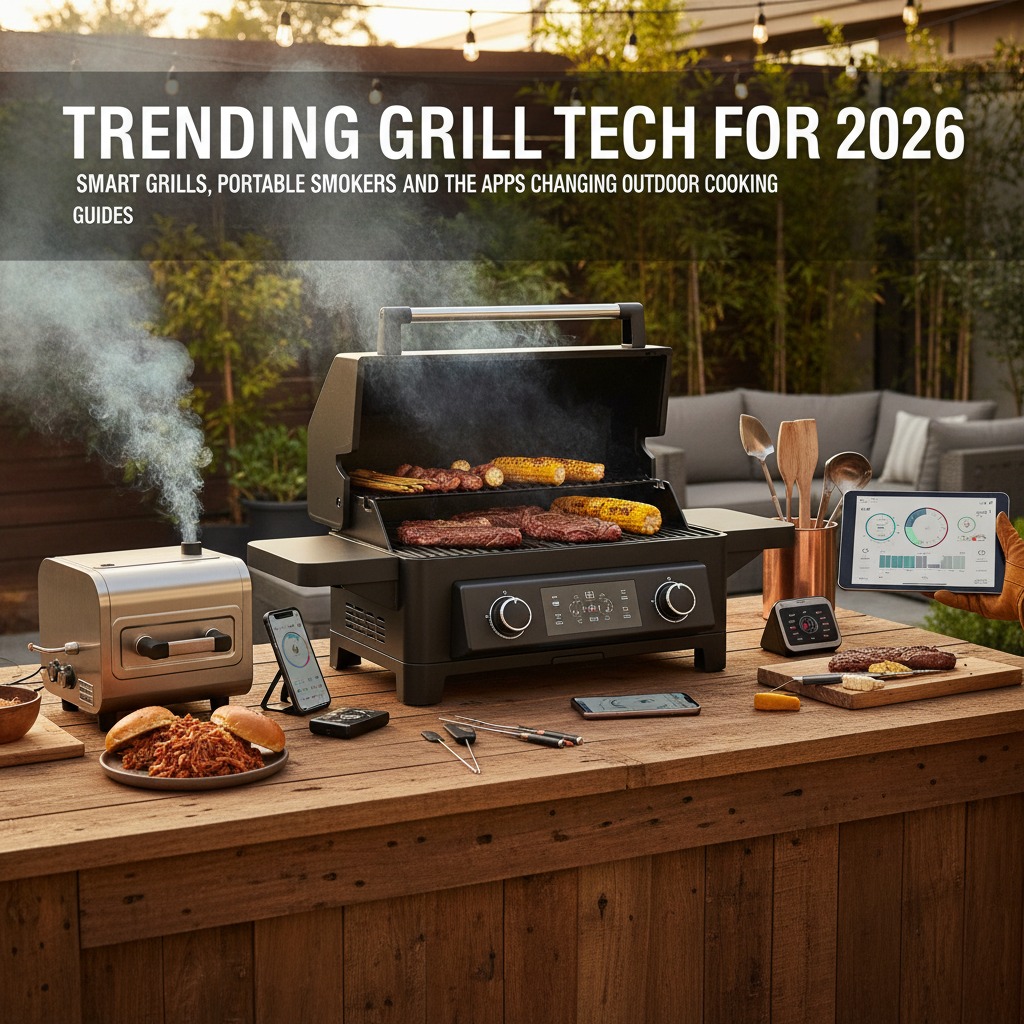
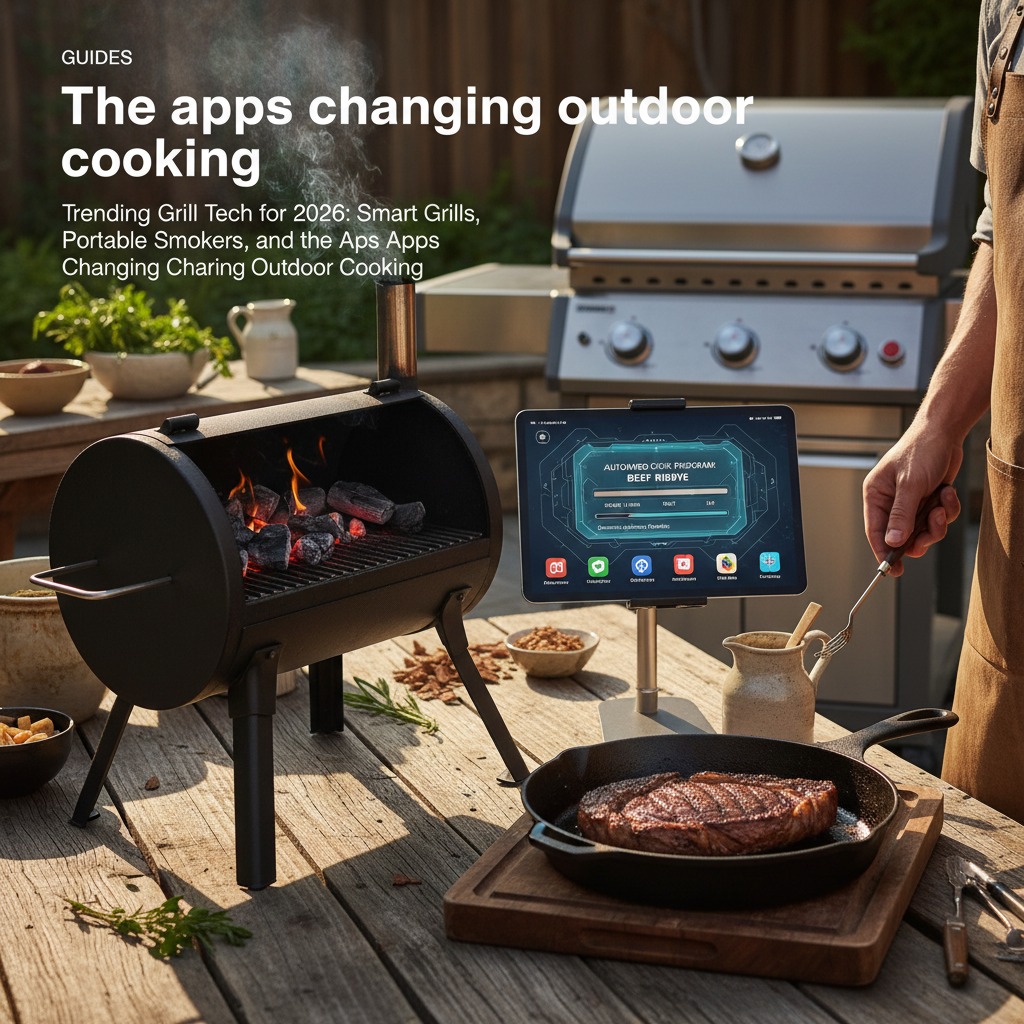
Trending Grill Tech for 2026: Smart Grills, Portable Smokers, and the Apps Changing Outdoor Cooking
A forward-looking guide to the biggest grill and outdoor-cooking tech trends for 2026. Learn what smart grills, next‑gen pellet systems, battery-powered smokers, and connected probe apps actually do, who should care, and how to set up and maintain them for better results.
July 5, 2026
Why 2026 is different for grill gear
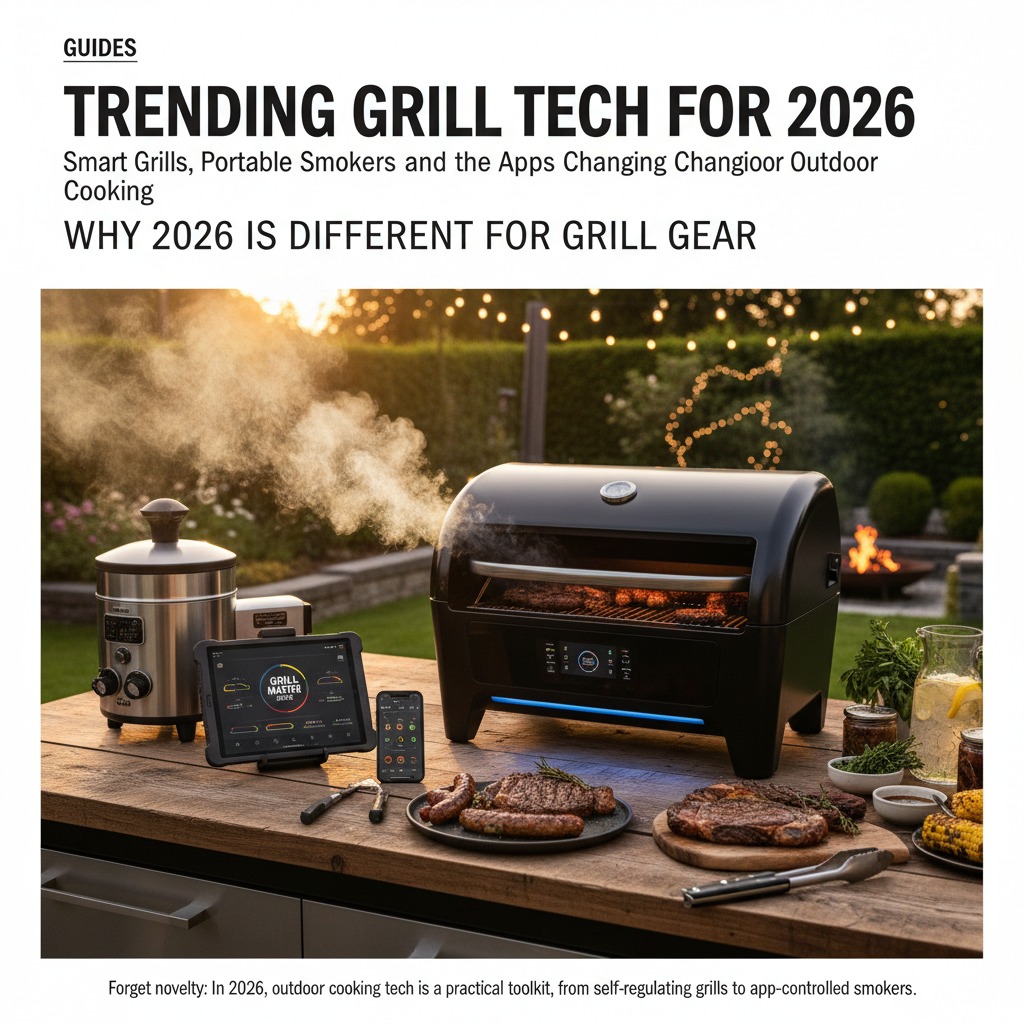
If you thought smart speakers and phone apps were leaving the kitchen behind, think again. In 2026 outdoor cooking tech has matured from novelty to practical toolkit: grills that self-regulate, pellet systems that think like sous-chefs, lightweight battery smokers that go anywhere, and apps that turn temperature readings into repeatable results. This guide explains the major trends, who benefits, what to look for when buying, and simple setup and maintenance tips to get the most out of modern gear.
The headline players
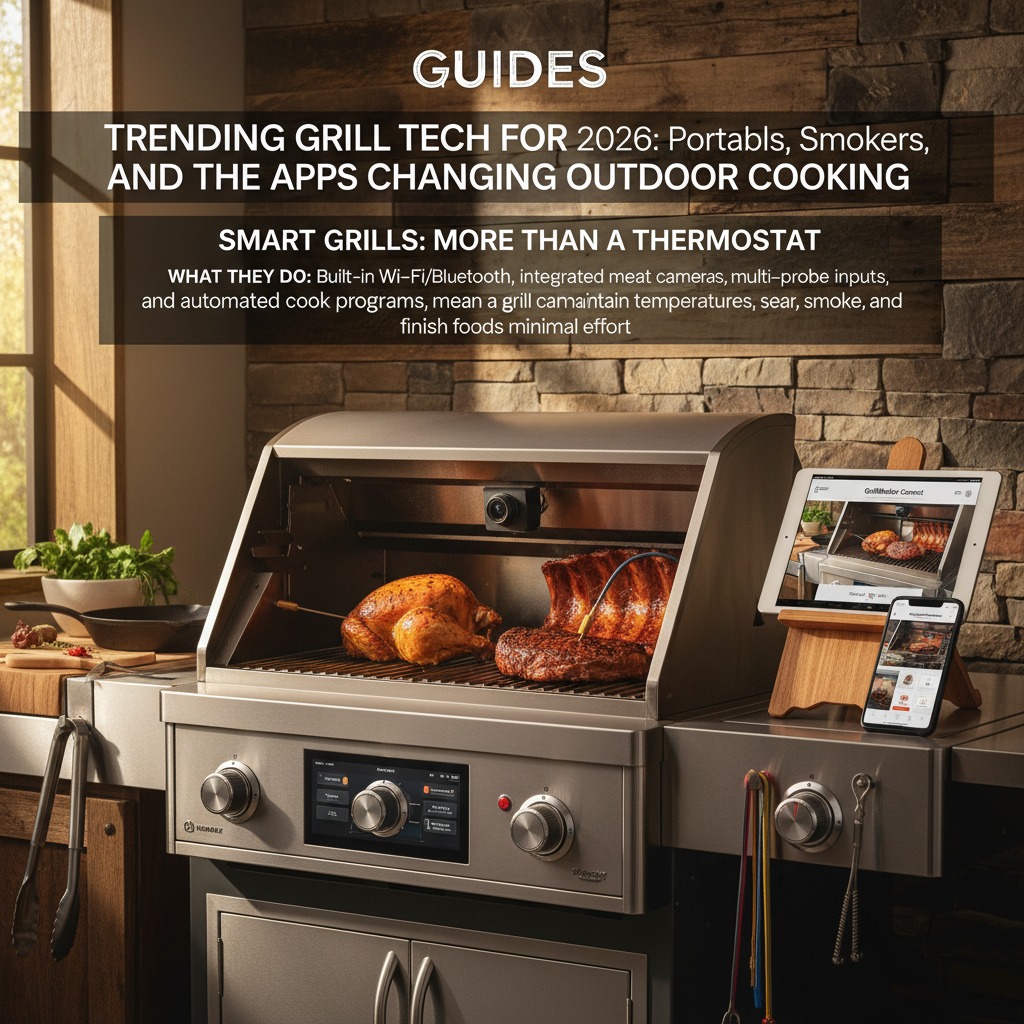
Smart grills: more than a thermostat
What they do: Built-in Wi‑Fi/Bluetooth, integrated meat cameras, multi‑probe inputs, and automated cook programs mean a grill can maintain temperatures, sear, smoke, and finish foods with minimal babysitting. Advanced models include AI-driven cook modes that adjust heat based on food size and probe readings.
Who benefits: Entertainers who want consistent results, busy home cooks who want to set-and-forget, and backyard pros who value precise searing and low-and-slow accuracy.
Buying criteria:
Reliable connectivity (Wi‑Fi + Bluetooth) and frequent firmware updates.
Multiple probe inputs (2–6) and support for third‑party probes.
PID or similar closed-loop temperature control for stability.
Integrated cameras or meat databases if you want hands-off cooks.
Quick setup & maintenance tips:
Calibrate the grill thermometer against a separate instant-read probe before first use.
Update firmware before the first cook to avoid connectivity bugs.
Clean burners and grease trays regularly—smart systems still need a clean environment to perform.
Next‑gen pellet systems: precision and flavor control
What they do: Pellet grills moved beyond simple PID controllers into dual-zone airflow, pellet auger sensors that detect jams, and pellet blends formulated to reduce ash and smoke bitterness. Expect hybrid systems that combine pellets with direct‑flame searing zones for steakhouse-worthy crusts.
Who benefits: Low-and-slow fans who also want to sear, and cooks who crave consistent smoke profiles without constant fiddling.
Buying criteria:
Hopper capacity and pellet feed diagnostics (jam detection/reverse auger).
Separate sear box or direct-flame capability.
Pellet quality recommendations from the manufacturer.
Tips:
Use high-density pellets to reduce dust and ash.
Store pellets in a dry bin—moisture kills consistent firing.
Clean the firepot and auger area every 10–20 cooks depending on use.
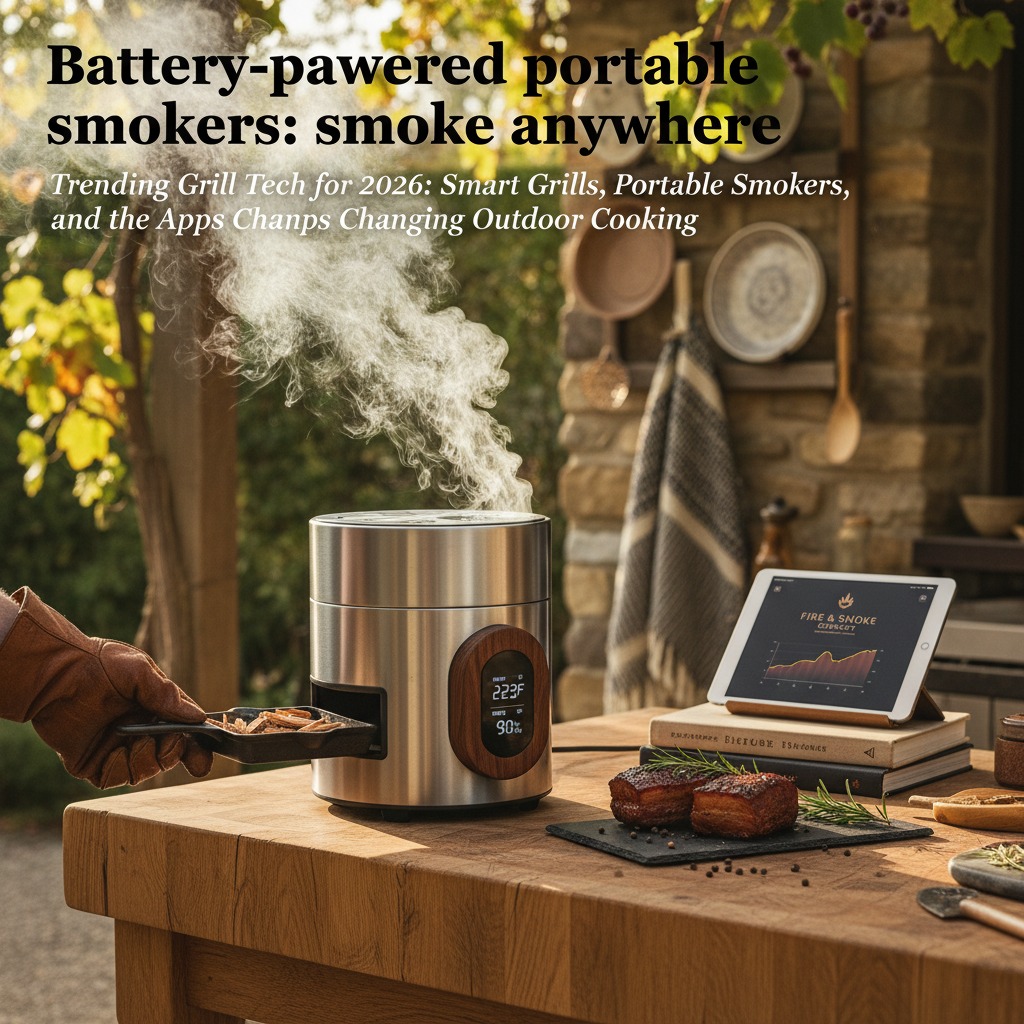
Battery-powered portable smokers: smoke anywhere
What they do: Battery-powered smokers use efficient heating elements and smart controls to deliver real smoke performance without an AC outlet or bulky propane. They’re lightweight, fast to deploy, and often pair with phone apps for remote control.
Who benefits: Campers, tailgaters, and urban dwellers with limited outdoor space who still want quality smoked meats.
Buying criteria:
Battery capacity (watt-hours) and estimated run-time at target temps.
Inverter quality and quick-charge options.
Weight vs. capacity balance—pick what you’ll actually carry.
Setup & maintenance tips:
Fully charge before travel and carry a small power bank or spare battery if you plan long smokes.
Clean smoke channels after each outing—portable units accumulate soot faster.
Use water pan or smoke generator attachments when chasing long low-and-slow runs for stable temps.
Connected probes and control apps: the brain behind the flame
What they do: Modern probe systems offer multi-probe streaming, cloud cook logs, cook-scheduling, and automation. Apps can trigger temperature-based actions (move to sear, hold, or start a finishing cycle) and share cook profiles across devices. Many now integrate with voice assistants and IFTTT-style automations.
Who benefits: Anyone who wants accurate doneness every time, smokers that need multi-item coordination, and cooks who want to archive and replicate successful cooks.
Buying criteria:
Probe accuracy and response time (±1°F preferred).
Number of simultaneous channels and wireless range.
App maturity—look for active developer support and community recipes.
Practical tips:
Place ambient probe in the grill center, and meat probes in the thickest part of the protein (not touching bone).
Verify probe readings with a second instant‑read thermometer for critical roasts.
Export and review cook logs to refine time/temperature for your favorite cuts.
The apps changing outdoor cooking
Apps are moving from dashboards to decision engines. The best cooking apps in 2026 include:
Automated cook programs: Preloaded sequences for common proteins that balance smoke, rest, and sear phases.
Community recipe sync: Share or download vetted cook profiles—ideal to try a proven setup for [Cherry Cola Smoked Ribs with Sparkler Glaze](/recipes/cherry-cola-smoked-ribs-sparkler-glaze) or a long brisket smoke.
Adaptive recommendations: Apps that recommend smoke woods, pellet blends, and humidity control based on local weather data.
Cross-device continuity: Start a cook on your grill’s controller, monitor on your phone, and finish from a tablet or smartwatch.
Real-world use cases
Tailgating with a battery smoker: preheat at home, top off battery, and use the app to hold temps while you enjoy the game.
Backyard weekend chef: use a smart grill’s programmed sear + low-and-slow mode to do a reverse-sear ribeye and smoke veggies (try it with [Grilled Artichoke Hearts with Smoky Romesco and Lemon‑Garlic Aioli](/recipes/grilled-artichoke-hearts-smoky-romesco-lemon-garlic-aioli) for a tasty side).
Party host: schedule multiple probes so roasts, sides, and hot dogs finish in sequence without last-minute juggling—pair the system with community recipes for reliable timing.
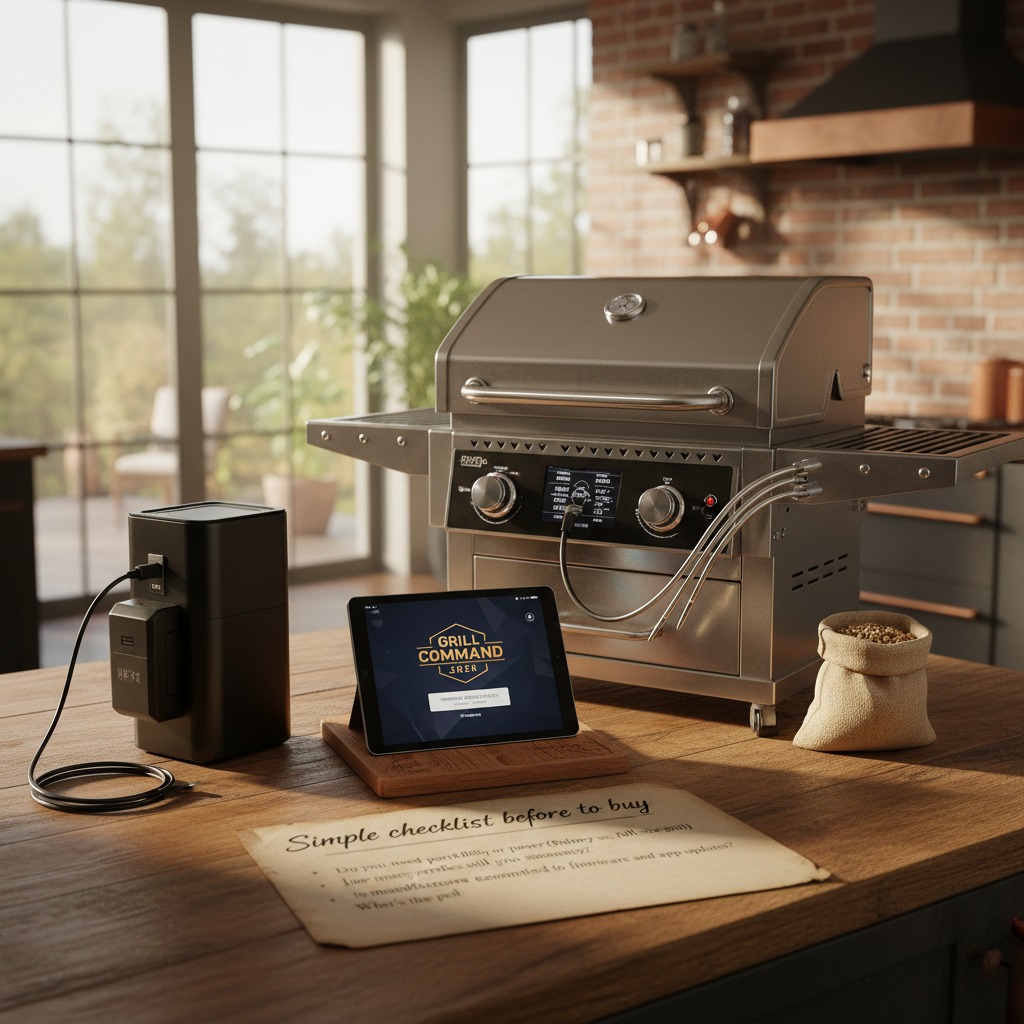
Simple checklist before you buy
Do you need portability or power? (Battery vs. full-size grill)
How many probes will you actually use simultaneously?
Is the manufacturer committed to firmware and app updates?
What’s the pellet or fuel ecosystem—are consumables easy to source?
Read community cook logs and try to find cook profiles for dishes similar to what you’ll often cook (smoked ribs, seafood, whole birds).
Final maintenance & safety reminders
Keep firmware and app software current—many bug fixes and safety patches arrive post-release.
Charge batteries and store them properly; treat lithium packs like the critical component they are.
Regularly inspect seals, gaskets, and auger housings on pellet systems.
Never leave a grill or smoker unattended indoors or in enclosed spaces—ventilation and clearance still matter with tech upgrades.
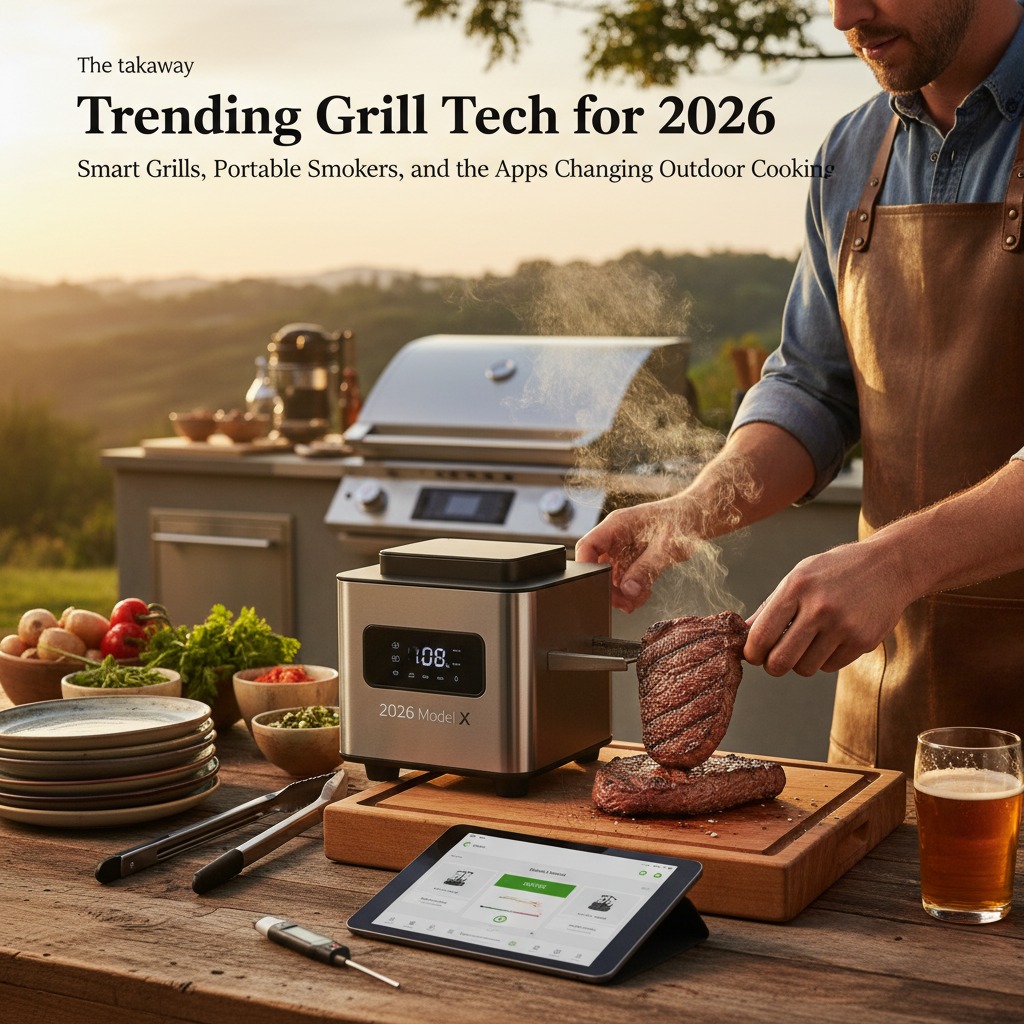
The takeaway
2026’s grill tech isn’t about gimmicks—it's about giving cooks control, repeatability, and freedom to cook where they want. Whether you want the convenience of a smart grill, the flexibility of a battery smoker, the refined flavor control of next‑gen pellet systems, or the organizational power of connected probe apps, there’s practical gear that will raise your results. Start small—pair a reliable multi‑probe with a solid app—and let logged cooks and firmware updates refine your technique. For inspiration, pair your new tech with recipes like [Smoked Short Rib Birria Tacos with Charred‑Lime Consommé and Quick‑Pickled Red Onions](/recipes/smoked-short-rib-birria-tacos-charred-lime-consomme-quick-pickled-red-onions) or [Grilled Lobster Tails with Garlic Herb Butter](/recipes/grilled-lobster-tails-garlic-herb-butter) to see how digital control transforms flavor.
Welcome to smarter fireside cooking—where precision and flavor meet convenience.